
Brooks Adams
The Law of Civilization and Decay by Brooks Adams
"Wherever civilization has reached the point at which energy expresses itself through money, faith must be subordinate to the representative of wealth"
Brooks Adams
"Wherever civilization has reached the point at which energy expresses itself through money, faith must be subordinate to the representative of wealth"
Robert Ellis Thompson
"It might be easily and fairly elaborated into an economical history of the earth, for that history is nothing but the story of man's conquest of nature's resistance and the progressive mastery of her manifold utilities"

Charles Francis Adams Jr.
"The railroads have had a profound effect on American society. They have made possible the growth of a national market, and they have helped to create a more unified nation. They have also had a major impact on the development of cities and towns."
Forest Hill
"Transportation is the lifeblood of a nation. Without adequate transportation facilities, no country can achieve its full economic potential."
Roman Szporluk
"The need of a constantly expanding market for its products chases the bourgeoisie over the entire surface of the globe. It must nestle everywhere, settle everywhere, establish connections everywhere"

Alexander del Mar
"No metal, as such, can measure value with precision or equity. This is what Money alone can effect; and if there were no question of policy in the matter, I should advocate a monetary system independent of metals."

Edward Kellogg
"The money of a nation, instead of being a power by which a few capitalists may monopolize the greater part of the earnings of labor, ought to be a power which should distribute products to producers, according to their labor expended in the production."
John Mearsheimer
"War is a frequent occurrence in great power politics. It is not the result of irrationality or miscalculation, but rather of the rational pursuit of self-interest in an anarchic world."
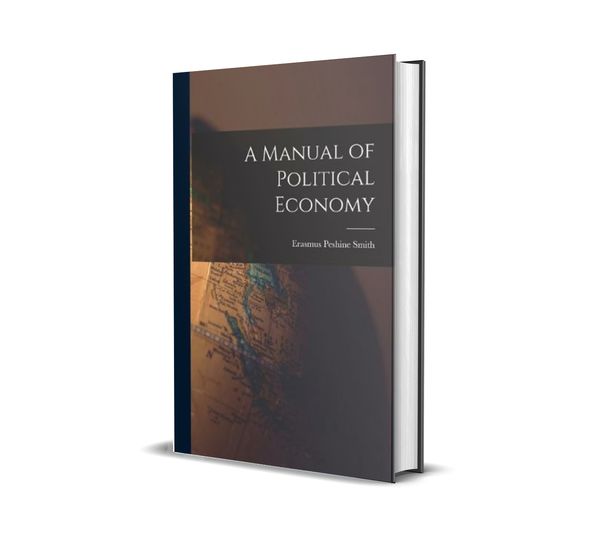
Erasmus Peshine Smith
"In reading certain Economists, one might be led to think that the products of industry were not made for man, but that man was made for the products"